The energy drink category has shifted. While performance-driven messaging once dominated retail shelves, today's consumers are increasingly intentional about product selection, reading labels more closely and seeking ingredients they feel good about. For retailers and category managers, this evolution presents both an opportunity and a challenge: how to stock products that reflect changing consumer preferences while driving category growth.
Lotus Plant Power addresses this shift head-on with a two-pronged approach: clean plant-based formulation paired with a distinctive packaging strategy designed to maximize shelf presence and consumer trial in one of the most competitive beverage segments.
Proprietary Formula Supports Category Positioning
At the core of Lotus's offering is Plant Power 7™ (PP7™), a proprietary blend of certified organic plant-based ingredients formulated to align with consumer demand for cleaner labels. The formula combines functional botanicals including green coffee beans, guayusa, green tea extract, coffee fruit, elderberry, Jerusalem artichoke, and ashwagandha KSM-66.
The ingredient strategy reflects a broader industry trend: as consumers become more selective about what fuels their bodies, brands that deliver both transparency and efficacy gain shelf authority. Lotus's clean formulation supports premium positioning while addressing the growing segment of consumers who scrutinize ingredient panels before purchase decisions.
Color-Driven Packaging as Retail Differentiator
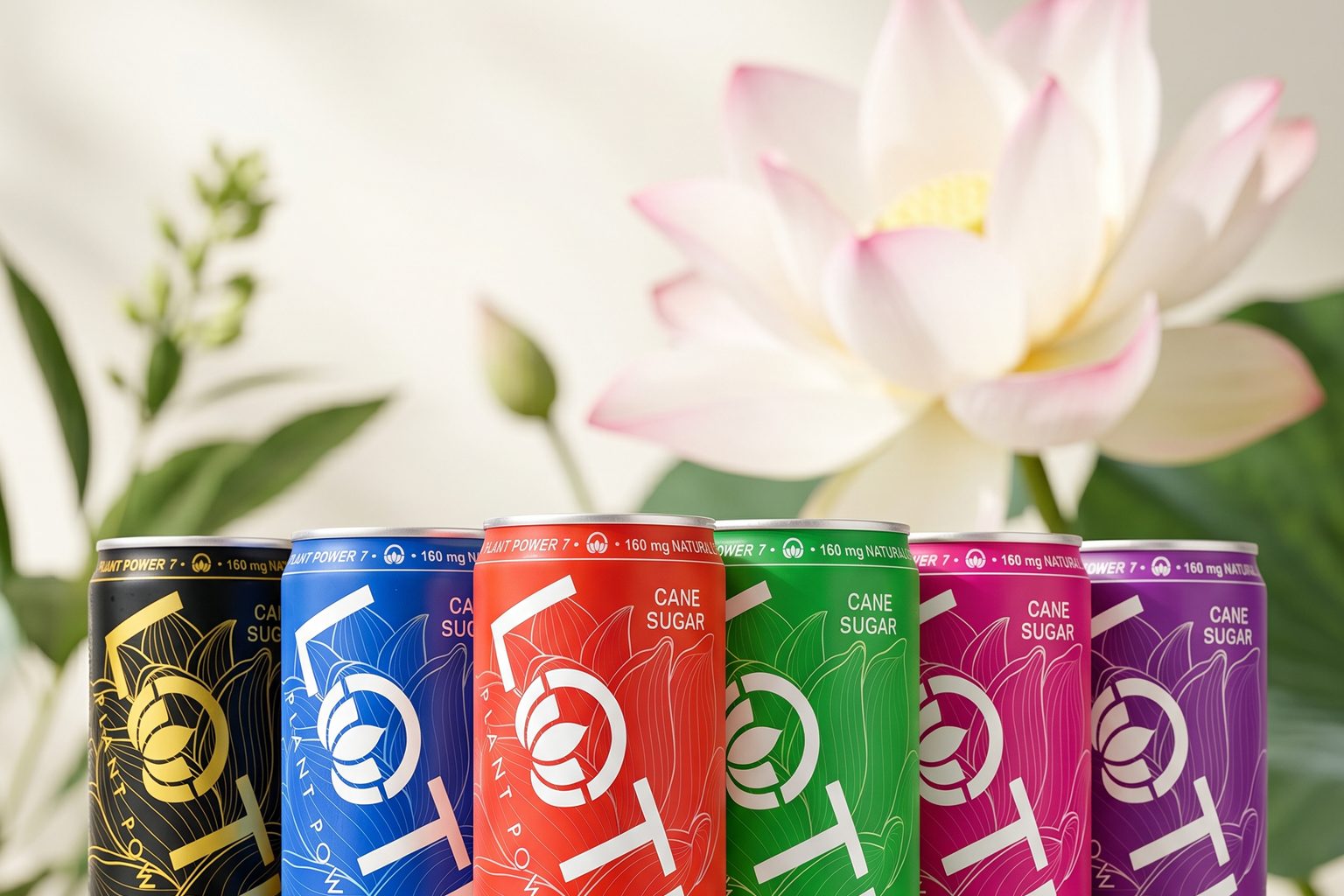
Rather than building packaging around traditional flavor nomenclature—watermelon, cherry lime, tropical citrus—Lotus has constructed a color-based visual language that functions as the primary shelf identifier. Pink Lotus, Blue Lotus, Green Lotus, Red Lotus, Purple Lotus, and Gold Lotus create instantly recognizable visual markers that stand out in crowded retail environments.
This architecture delivers measurable retail advantages. Instead of designing completely different visual identities for each SKU, Lotus maintains consistent packaging architecture while allowing color to become the dominant design element. The result is a cohesive category block on shelf that reads as an intentional system rather than scattered single products.
For category managers, this approach reduces visual fragmentation while maximizing shelf impact. For consumers, the consistent structure with color variation creates both familiarity and choice—addressing the psychological driver that influences trial across multiple SKUs within a brand lineup.
Packaging Design Drives Shelf Performance
Industry recognition of Lotus's design strategy underscores its retail effectiveness. The packaging system has earned acknowledgment for both design excellence and shelf presence within one of the most competitive beverage categories.
The philosophy behind the design extends beyond aesthetics. Great packaging communicates premium positioning while creating perceived value that justifies shelf space allocation. By designing each can as something consumers want to hold, photograph, and carry—functioning as a beverage accessory rather than simply a functional product—Lotus creates an identity that extends beyond the functional energy benefit.
This approach influences the consumer journey at retail. Rather than relying solely on flavor names or caffeine content claims, the visual system evokes curiosity and drives trial. For retailers, products that generate trial velocity and support repeat purchase patterns deliver stronger category performance metrics.
Category Performance and Consumer Sell-Through
The convergence of clean ingredients and distinctive packaging architecture creates a two-layer value proposition for retail buyers and category managers: first, the product delivers on functional and formulation expectations; second, the packaging system drives incremental trial and supports brand-building that extends consumer engagement beyond individual purchase occasions.
By combining PP7™ with a color-driven packaging system, Lotus connects product efficacy with consumer identity and self-expression. The result is a beverage that performs on shelf while supporting stronger consumer sell-through patterns. In a category where shelf velocity and repeat purchase directly impact allocation decisions, Lotus's approach to packaging as a category driver—rather than mere flavor identifier—creates measurable competitive advantage in retail environments.