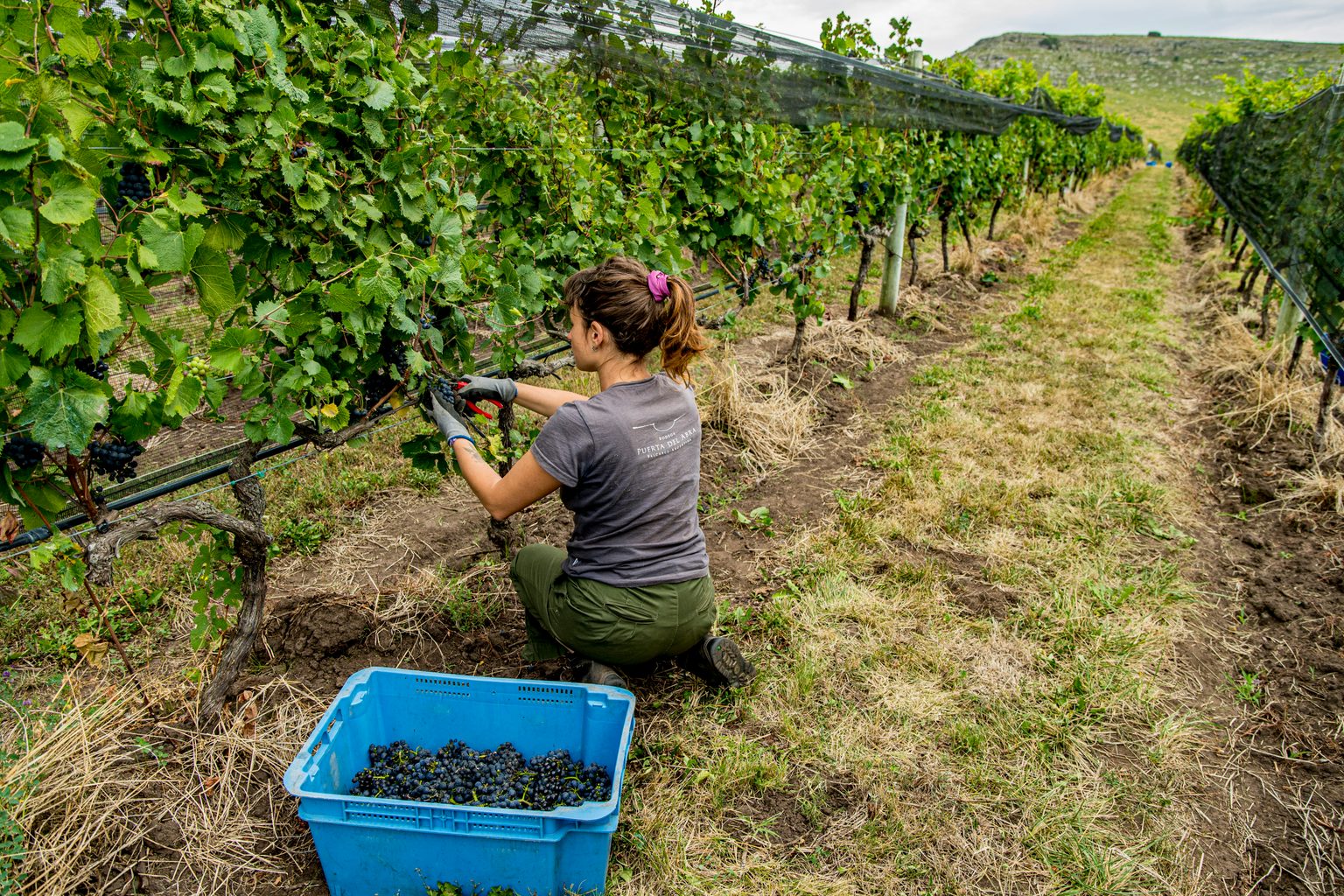
Balcarce—a coastal-influenced region in Buenos Aires province that received its official Geographical Indication status in 2022—represents a significant category expansion opportunity for wine retailers and category managers seeking to differentiate beyond traditional Mendoza and Patagonia positioning. At the heart of this emerging market is Bodega Puerta del Abra, founded in 2013 by businessman and wine lover Jorge Perez Companc and his family. The producer has built a portfolio strategy designed for high-end retail and on-premise placements, with production held intentionally modest at 40,000 to 50,000 bottles annually to maintain brand positioning and retail margin support.
Terroir Translation: From Soil Science to Shelf Differentiation
What sets Puerta del Abra apart for retail buyers is its foundation in documented terroir science. The family commissioned renowned French soil specialists Lydia and Claude Bourguignon—whose work includes blue-chip Burgundy domaines—to map and analyze the site. Their studies revealed a mosaic of clay and limestone seams, with traces of granite and an evident marine imprint, all at just over 100 meters above sea level and roughly 30 to 50 kilometers from the ocean. Unlike the high, dry desert positioning typical of Argentine Malbec narratives, Balcarce offers a low-lying profile with strong maritime influence, abundant rainfall, and cool Winkler II temperatures. This messaging framework provides retail teams a compelling and defensible consumer story for shelf education and on-premise sommelier placement.
Seasonal variability is significant in Balcarce, meaning each vintage carries a completely different profile based solely on weather conditions. Rather than a liability, the estate frames this as a defining characteristic—and a key selling point for retailers targeting quality-conscious, repeat consumers willing to explore vintage variation as a category differentiator.
Portfolio Architecture for Multi-Tier Retail Placement
Puerta del Abra's varietal strategy reflects deliberate portfolio architecture for diverse retail channels. The core Puerta del Abra line in the US market represents the purest varietal expression of their estate vineyard El Vallecito. Rather than leading with Malbec, the portfolio is built around Chardonnay, Riesling, and Albariño for whites, and Pinot Noir, Cabernet Franc, Bonarda, Tannat, and Merlot for reds. The Albariño channels its Old World roots through chalky soils and softer southern light, combining ripe fruit with a quiet mineral line for premiumization opportunities. The Riesling ripens slowly enough to build aromatic complexity without sacrificing its spine of acidity, appealing to on-premise wine lists seeking elegant, food-pairing options.
The Pinot Noir steps out from its traditional role as a sparkling base in Argentina to show an elegant, finely structured still red with real aging potential—a shelf-positioning advantage in competitive wine categories. The Chardonnay, developed under Velo de Flor (a technique closely associated with Jerez), has proven one of the estate's most compelling expressions for upscale retail placement. On the red side, Cabernet Franc has become a portfolio staple with pronounced pyrazine notes as a 100 percent single varietal, while Bonarda tends toward red fruit and gentle spice over a chalk-etched backdrop, and Tannat offers darker fruit with firm but polished tannins and a subtle savory note.
The Itzae line reinforces this exploratory positioning. Each year, micro-vinifications of available inventory help identify the most compelling expressions of the vintage, which are then assembled into red and white blends. The result is a wine that changes character from edition to edition, reflecting the full diversity of the vintage—a narrative asset for retailers targeting consumers seeking discovery-driven, limited-allocation purchases.
Sustainability Credentials and Brand Recognition
For category managers building sustainability positioning, Puerta del Abra obtained vegan certification in 2023, formalizing its long-standing practice of avoiding animal-derived fining agents. The team has moved to lighter bottles, implemented Good Agricultural and Manufacturing Practices, and participates in Balcarce's Green Fridays program promoting environmentally conscious behavior. These credentials support retail shelf claims and on-premise supplier narratives increasingly demanded by wine buyers and consumers.
The estate has achieved growing recognition from Decanter, James Suckling, and Global Masters while maintaining intentionally modest production. Most domestic allocation goes to high-end restaurants in Buenos Aires, with a California-based import arm handling US distribution. Spain and France are already active markets, and the team is exploring further European expansion where cool-climate styles and emerging origins resonate.
The estate's positioning statement reinforces its retail-focused philosophy: "We started this winery as a passion project of the family, something to be shared with those closest to us. As the project evolved, it opened new opportunities, but never losing focus of the foundational spirit. Today, we seek to find those in the industry that share that intimate passion for wine, willing to push boundaries and explore something new. For those, Balcarce awaits."
For retailers and category managers, Balcarce represents a differentiated shelf opportunity and a demonstrable alternative to traditional Argentine positioning. With controlled annual production of 40,000 to 50,000 bottles and premium on-premise placement focus, Puerta del Abra offers the scarcity narrative and terroir authenticity that support margin and brand loyalty in competitive wine categories.