Prima is crossing the channel divide. The protein bar brand, founded in 2023, has secured distribution in nearly 500 Kroger-network doors nationwide — a significant step from the natural/specialty shelf at Sprouts Farmers Market, where Prima holds the number-one selling protein bar SKU position, into the heart of conventional grocery.
The rollout spans eight Kroger regional banners: Kroger, Fred Meyer, Smith's, Fry's, Ralphs, King Soopers, Mariano's, and City Market. That footprint gives Prima access to one of the broadest conventional grocery networks in the country, exposing the brand to a mainstream shopper base that has historically been underserved by the ancestral-nutrition segment.
The Product Case
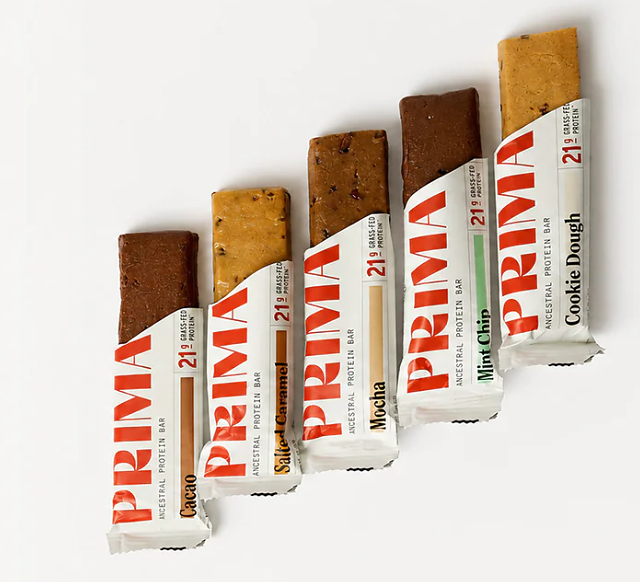
Prima's bars lead with 21 grams of grass-fed animal protein derived from beef tallow — a formulation that sits sharply outside conventional protein bar architecture, which typically relies on whey isolates, soy crisps, or pea protein. The line contains no seed oils, no artificial sweeteners, and no processed fillers, positioning it squarely within the clean-label, whole-food movement gaining traction across center store and perimeter categories alike.
The timing reflects a broader scan-data trend: syndicated data from Circana and Nielsen has tracked accelerating velocity in "real food" and minimally processed protein formats over the past 24 months, driven by shoppers actively reducing ultra-processed food consumption. Protein bars remain one of the highest-velocity snack segments in grocery, and the emergence of animal-based, seed-oil-free formulations represents one of the category's fastest-growing sub-segments — drawing incremental TDPs at both natural and conventional banners.
What the Kroger Win Signals
For a brand less than three years old, landing a near-500-door Kroger commitment is a meaningful commercial validation. Natural channel success at Sprouts — particularly a number-one SKU rank — is often the proof-of-velocity that unlocks conventional grocery planogram space, and Prima's trajectory suggests exactly that playbook. Retailers have grown increasingly receptive to ancestral and animal-based protein formats as shopper basket data demonstrates their ability to drive incremental category sales rather than cannibalize existing whey-dominant SKUs.
The Kroger expansion also places Prima in competition with established protein bar nationals that dominate conventional planograms, including Clif, KIND, RXBar, and Quest. Sustaining velocity against that facing pressure will depend on Prima's ability to convert trial at shelf — through end-cap placement, TPR support, and targeted digital MCBs — while continuing to build brand awareness beyond the core ancestral-nutrition consumer.
For retailers tracking the protein and nutrition bar category, Prima's move into the Kroger network represents the kind of natural-to-conventional crossover that category managers have increasingly used to refresh planogram assortments and capture share from shoppers trading toward functional and clean-label snacks. Whether the brand can sustain Sprouts-level velocities in a higher-volume, more competitive conventional environment will be the defining metric to watch in the quarters ahead.
Written by Michael Politz, Author of Guide to Restaurant Success: The Proven Process for Starting Any Restaurant Business From Scratch to Success (ISBN: 978-1-119-66896-1), Founder of Food & Beverage Magazine, the leading online magazine and resource in the industry. Designer of the Bluetooth logo and recognized in Entrepreneur Magazine's "Top 40 Under 40" for founding American Wholesale Floral, Politz is also the Co-founder of the Proof Awards and the CPG Awards and a partner in numerous consumer brands across the food and beverage sector.