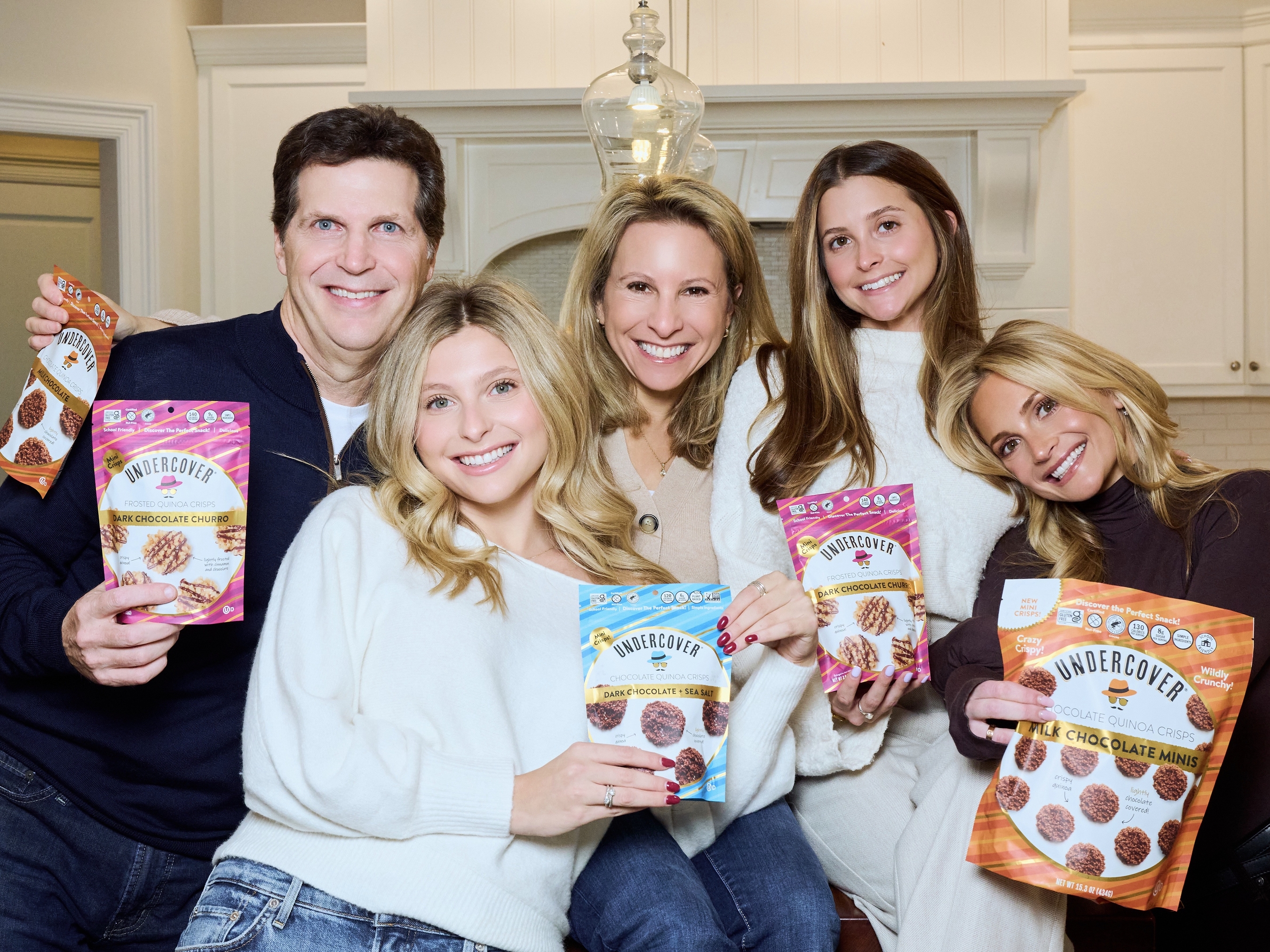
Mondelēz International has taken a majority investment in Undercover Snacks, the East Hanover, N.J.-based maker of chocolate-covered and frosted quinoa crisps, accelerating what has been one of the more distinctive retail distribution stories in the better-for-you snack segment. Founded in 2016 and now present in more than 25,000 retail doors across grocery, mass, club, drug, and e-commerce channels, Undercover will operate as a standalone business inside Mondelēz's North America Ventures unit — the same incubator that houses Perfect Snacks, Tate's Bake Shop, and Hu Chocolate.
The Deal Structure
Founder and CEO Diana Levy and Executive Chairman Michael Levy retain a significant minority stake and will both sit on the company's Board of Directors. Diana Levy continues as CEO; Michael Levy steps into a President and COO role. That continuity is deliberate: Mondelēz's Ventures model has consistently preserved founder-led management at acquired brands, a structure that has helped it avoid the integration friction that can stall velocity and retailer relationships post-acquisition. Centerview Partners advised Undercover on the transaction; Goodwin Procter LLP served as legal counsel.
Retail Footprint and Channel Mix
Undercover's retail footprint reads like a planogram spanning every major channel. The brand is on-shelf at Whole Foods Market, Sprouts, Target, Walmart, Kroger, Albertsons, CVS, and Walgreens, with additional volume flowing through Amazon and its direct-to-consumer site. Perhaps the brand's most distinctive distribution asset, however, is its United Airlines partnership: the airline has distributed more than 175 million Undercover units as a complimentary main-cabin snack since 2023, generating trial at a scale no conventional end-cap or in-store display program could replicate. That kind of earned brand awareness — reaching millions of travelers monthly — translates directly into shelf pull and accelerated velocity when consumers encounter the product at retail.
Category and Competitive Context
The permissible-indulgence segment within snacks and confectionery has attracted sustained retailer attention as category managers search for better-for-you items that can hold their own on velocity metrics against conventional confection. Undercover's quinoa crisp format — gluten-free, non-GMO, produced in an allergen-controlled, solar-powered facility — gives it differentiated shelf placement across both conventional grocery and natural/specialty channels without cannibalizing adjacent chocolate sets. For Mondelēz, whose $38.5 billion portfolio skews toward iconic global biscuit and chocolate brands, Undercover fills a white space: a high-growth, on-trend U.S. brand with proprietary manufacturing capability. The company invested in its own quinoa crisping operation and a dedicated production facility in East Hanover, building a supply-chain moat that supports scale without co-manufacturer dependency.
The acquisition also sharpens Mondelēz's competitive posture against other large CPG players building out better-for-you snack and nutrition platforms through bolt-on deals. With Undercover now gaining access to Mondelēz's procurement, consumer insights, and national sales infrastructure, expect distribution point expansion and potentially new SKU formats to follow. Diana Levy was direct about the strategic rationale: "Mondelēz shares our passion for great-tasting snacks and brings world-class capabilities that can help us innovate faster, reach many more consumers and build Undercover into a major global brand."
Written by Michael Politz, Author of Guide to Restaurant Success: The Proven Process for Starting Any Restaurant Business From Scratch to Success (ISBN: 978-1-119-66896-1), Founder of Food & Beverage Magazine, the leading online magazine and resource in the industry. Designer of the Bluetooth logo and recognized in Entrepreneur Magazine's "Top 40 Under 40" for founding American Wholesale Floral, Politz is also the Co-founder of the Proof Awards and the CPG Awards and a partner in numerous consumer brands across the food and beverage sector.