Club Channel Does the Heavy Lifting
Jones Soda Co. posted Q2 2026 net revenue of $10.2 million, a 107.8% increase over $4.9 million in the year-ago period, with the club channel emerging as the clear velocity driver. The Seattle-based craft soda brand credited Fallout-branded licensed SKUs — sold through club-format retailers — as the primary engine behind the gain, a distribution posture that underscores the outsized scan-data impact a single licensed collaboration can generate when it lands in a high-ACV, high-turn-rate channel. The company noted that approximately $2 million in expected Q2 shipments shifted into the second half, meaning the underlying consumer pull was stronger than the reported quarter reflects.
On a year-to-date basis through June 30, 2026, net revenue reached $22.6 million — up 147.7% from $9.1 million in the first half of 2025 — and the company is now guiding for full-year 2026 net revenue exceeding $45 million, representing growth of at least 80% over fiscal 2025. Management also added a positive Adjusted EBITDA target for the full year to its outlook, a meaningful threshold for a brand that posted a $(739,000) Adjusted EBITDA loss in Q2 2025. The Q2 2026 Adjusted EBITDA loss narrowed to $(312,000), an improvement of $427,000 year over year.
Margin Pressure, Freight Fix in Progress
Gross margin compressed 580 basis points to 27.5% in Q2 from 33.3% in the prior-year period, with elevated world oil prices cited as the primary headwind inflating logistics costs. The company completed a request-for-proposal across its major freight lanes late in the quarter, securing meaningfully lower rates that management expects to benefit margins into the back half. Selling and marketing expenses as a percentage of revenue improved to 18.7% from 21.7%, and general and administrative costs fell from 27.1% to 13.9% of revenue — demonstrating the operating leverage that flows from accelerating top-line growth even as royalty and broker payments tied to the Fallout license scaled up.
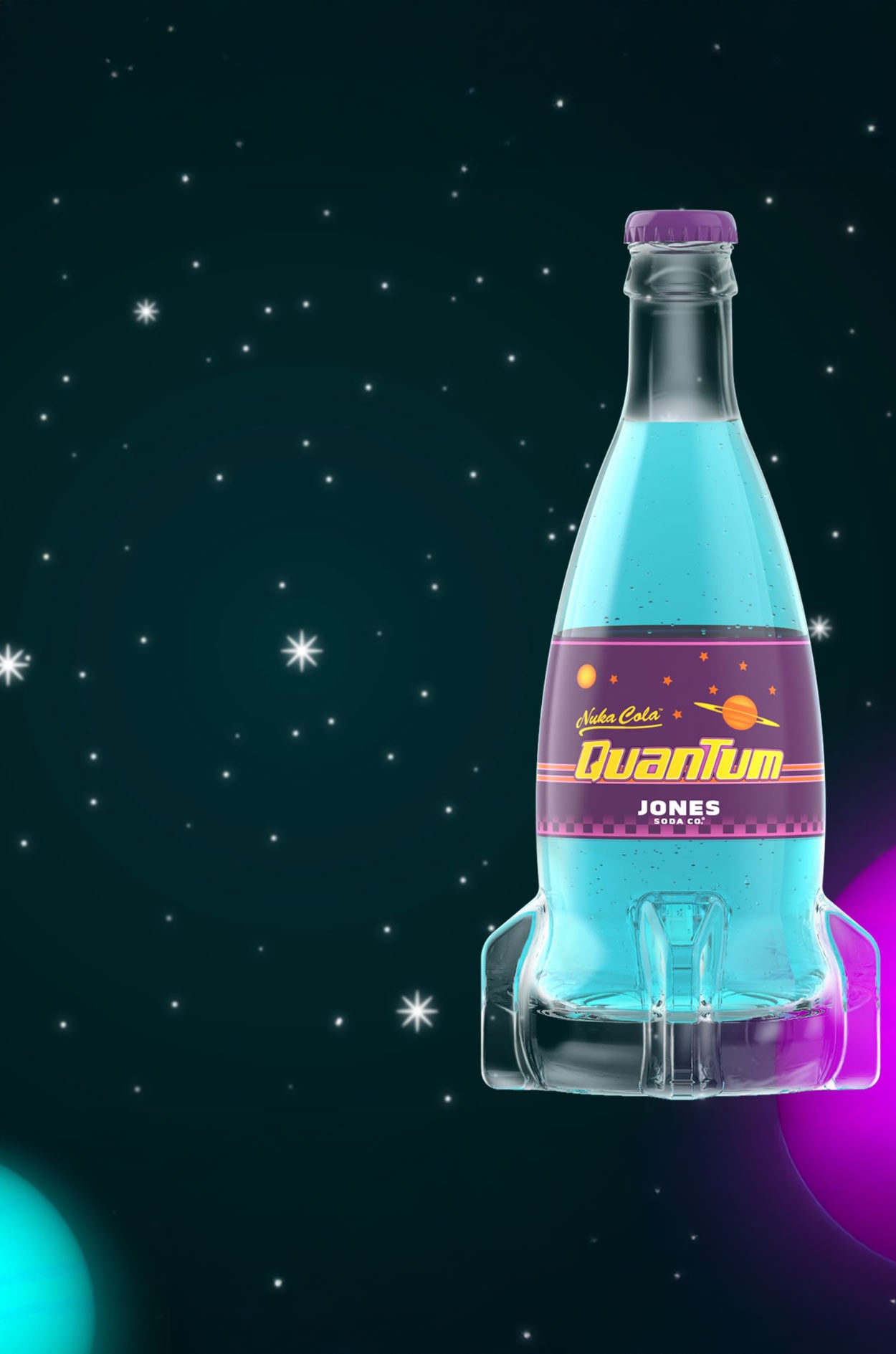
The gross profit contraction is a familiar trade-off for brands leaning into licensed collaboration programs: royalty obligations and incremental broker fees compress near-term margin while building TDP count and brand awareness in new retail tiers. For Jones Soda, the bet appears to be paying off at the revenue line. The brand also relaunched a limited-edition Fallout Nuka Cola Quantum Rocket Bottle after the first release sold out, and brought back its Crayola x Jones Soda collection with a new Fruit Punch SKU for the back-to-school season — tactics that sustain shelf conversation and support end-cap and in-store display eligibility at retail.
Pipeline and Retail Expansion
Beyond the Fallout franchise, Jones Soda expanded its better-for-you portfolio with a Zero Sugar craft soda lineup launched into Western Canada club stores — a distribution move that broadens the brand's footprint in a format where multi-pack and club-pack formats typically command strong velocity and favorable planogram positioning. The company also announced a new collaboration with Rap Snacks, billed as the Official Snack Brand of Hip Hop, with a line of hip-hop-inspired craft sodas slated to begin contributing revenue in fiscal 2027. That partnership signals Jones Soda is building a repeatable licensed-collaboration playbook — one that aligns with broader trends in functional and flavored beverages where cultural IP can accelerate trial and drive incremental distribution points.
Scott Harvey, CEO of Jones Soda Co., described Q3 as potentially "one of the strongest quarters in the Company's history," pointing to the deferred Q2 shipments landing in the current period. The company carried $2.4 million in cash at June 30, supplemented post-quarter by approximately $1.9 million in aggregate gross proceeds from brokered and non-brokered private placements. For retailers and category managers tracking emerging brands in the carbonated soft drink and craft beverage segment, Jones Soda's club-channel momentum and expanding collaboration pipeline represent a brand worth watching on the planogram reset calendar.
Written by Michael Politz, Author of Guide to Restaurant Success: The Proven Process for Starting Any Restaurant Business From Scratch to Success (ISBN: 978-1-119-66896-1), Founder of Food & Beverage Magazine, the leading online magazine and resource in the industry. Designer of the Bluetooth logo and recognized in Entrepreneur Magazine's "Top 40 Under 40" for founding American Wholesale Floral, Politz is also the Co-founder of the Proof Awards and the CPG Awards and a partner in numerous consumer brands across the food and beverage sector.