Ancient Crunch, the parent company behind seed oil-free snack brands MASA and Vandy, is completing a full-chain rollout at Whole Foods Market this August — converting a 93-store test into nationwide distribution and pushing the company's combined U.S. door count past 3,000 locations. The expansion marks the most significant retail step yet for a brand that built its early base through direct-to-consumer before moving aggressively into the natural and specialty channel.
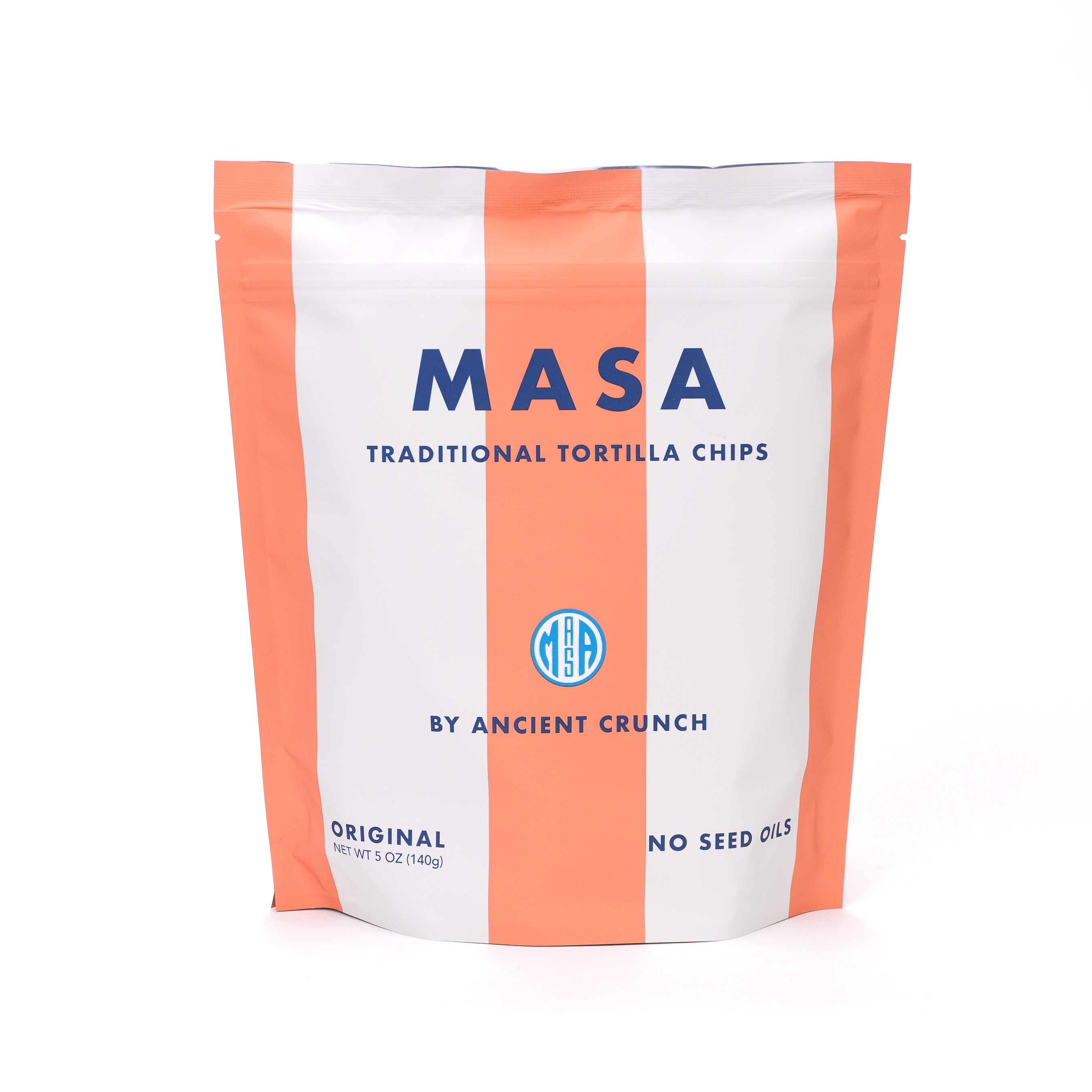
The four SKUs entering Whole Foods system-wide are MASA Original, MASA Lime, Vandy Original, and Vandy French Onion. MASA is a nixtamalized-corn tortilla chip cooked in 100% grass-fed beef tallow; Vandy applies the same tallow-fried approach to a kettle-style potato chip. Both brands are formulated without seed oils, fillers, or artificial additives — a positioning that has become a high-velocity wedge in the better-for-you salty snack set as clean-label demand intensifies.
New Retail Muscle
To manage the step-change in retail complexity, Ancient Crunch has added two senior leaders. Al Matulis joins as Head of Retail with more than 20 years of experience scaling consumer brands across the natural, mass, e-commerce, and club channels. He has held commercial roles at Fortune 100 companies including Kimberly-Clark and Kellogg's, and at high-growth snack brands Quinn Snacks and Kernel Season's. His background in biomedical engineering and an MBA in finance gives him an unusual profile for managing planogram sell-in, slotting negotiations, and velocity tracking simultaneously. "I am excited by the opportunity to help lead Ancient Crunch's evolution from a DTC-driven business to an omnichannel focused house of beloved BFY brands," Matulis said. "We're building a best-in-class retail organization to support the incredible momentum we're seeing."
Greg Reintjes Jr. arrives as Chief Marketing Officer, charged with growth strategy across the full Ancient Crunch portfolio. He most recently served as SVP and Head of Marketing at LALO Spirits, where he helped build the brand's marketing organization ahead of its acquisition by Tito's Handmade Vodka. Earlier stints at Beam Suntory sharpened his commercial-strategy credentials. Reintjes will need to translate the brand's strong DTC identity into the in-store display and scan-data story that drives retailer reorder decisions at scale.
Competitive Context
The nationwide Whole Foods authorization is a meaningful ACV gain for a young brand still building total distribution points. Whole Foods' roughly 530 U.S. doors carry outsized influence in the natural/specialty channel; a full-chain placement accelerates trial among the core health-conscious shopper that is most receptive to the seed oil-free claim. Beyond Whole Foods, Ancient Crunch already has shelf space at Target, Sprouts, Erewhon, Bristol Farms, The Fresh Market, and Amazon, building the multi-channel presence that increasingly defines sustainable CPG velocity in the salty snack category.
The seed oil-free and tallow-cooked positioning sits at the intersection of two durable category trends tracked in snack and better-for-you reporting: consumer skepticism toward industrial seed oils and renewed interest in traditional animal-fat cooking techniques. That tailwind has pulled several emerging chip brands into natural channel planograms over the past 18 months, intensifying competition for facing space in the BFY salty snack aisle. Ancient Crunch's dual-brand strategy — one tortilla chip, one potato chip — also gives the company a credible argument for blocking multiple shelf positions and increasing its TDP within a single retail banner.
Co-founders Seth Goldstein and Steven Rofrano framed the Whole Foods expansion as a foundation rather than a ceiling. "We've always believed there was a massive opportunity to bring real-food snacks back to grocery shelves," they said in a joint statement. "Expanding nationwide at Whole Foods Market is an exciting milestone, and we're just getting started." The executive hires signal that the company is investing in the commercial infrastructure — retail sales, demand planning, and brand investment — required to defend and grow shelf space once the initial buzz of a new authorization fades. For more on emerging snack brands navigating the natural-to-mass channel transition, see category management coverage.
Written by Michael Politz, Author of Guide to Restaurant Success: The Proven Process for Starting Any Restaurant Business From Scratch to Success (ISBN: 978-1-119-66896-1), Founder of Food & Beverage Magazine, the leading online magazine and resource in the industry. Designer of the Bluetooth logo and recognized in Entrepreneur Magazine's "Top 40 Under 40" for founding American Wholesale Floral, Politz is also the Co-founder of the Proof Awards and the CPG Awards and a partner in numerous consumer brands across the food and beverage sector.