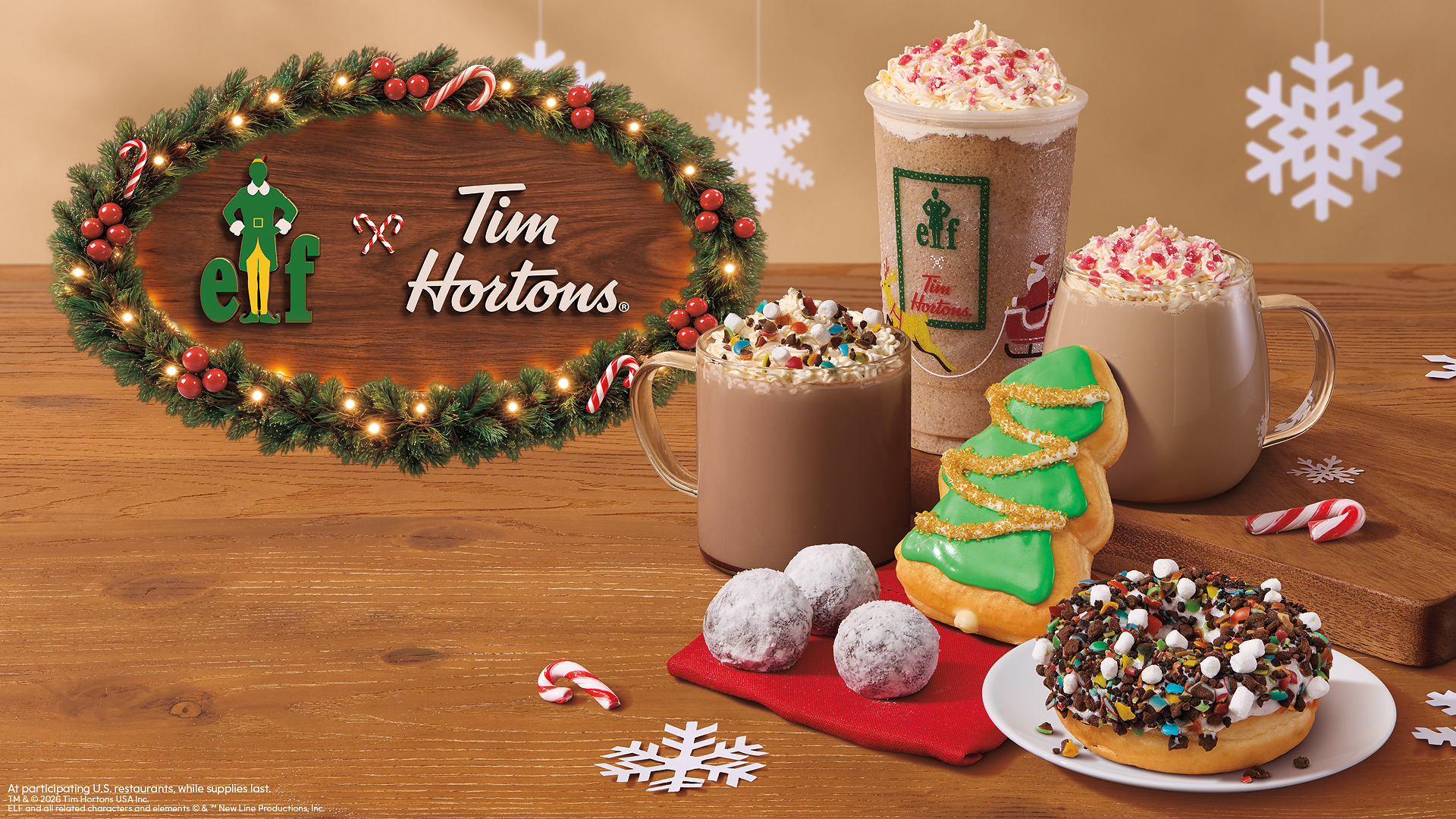
Tim Hortons is activating a licensed IP partnership with Warner Bros. Consumer Products to push six new ELF-themed menu items and co-branded packaging into participating U.S. restaurants beginning November 18, targeting the high-velocity holiday beverage and bakery window that QSR operators increasingly rely on to lift average ticket and drive repeat visits.
The limited-time offering spans both food and beverage dayparts, a dual-category approach that reflects the chain's ongoing effort to build basket size beyond its coffee core. On the beverage side, the lineup includes the Candy Cane Forest ELF Latte (available hot or iced), the Candy Cane Forest ELF Iced Capp, and the ELF Hot Chocolate — the last finished with spaghetti-shaped whipped topping and a mix of chocolate cookie crumble, crushed candy pieces, and mini marshmallows, a direct nod to the film's iconic spaghetti-and-syrup scene. Baked goods include the ELF Chaos Donut, ELF Snowball Timbits, and the Holiday Cheer Donut, a tree-shaped yeast donut with green icing and gold sugar garland.
The IP Play
Licensed-property tie-ins have become a proven mechanism for QSR and fast-casual operators to generate earned media and social engagement without proportional incremental spend. For Tim Hortons, which operates more than 6,000 systemwide locations across Canada, the U.S., and international markets, the ELF collaboration offers a culturally familiar property with strong annual recall — the film reliably re-enters pop culture conversation each November — to anchor the chain's U.S. holiday merchandising window. Limited-edition co-branded packaging featuring Buddy the Elf extends the program's shelf presence and reinforces purchase intent at the point of transaction, functioning similarly to how CPG brands use seasonal pack changes to trigger incremental impulse buys at retail.
"ELF is a must-watch for so many people every holiday season and we're so excited to bring the fun spirit of Buddy the Elf and his favorite flavors to Tims," said Katerina Glyptis, President of Tim Hortons U.S. The company is positioning the rollout as an experiential complement to the film's fanbase rather than a straight licensing execution.
Holiday Velocity Window
The November–December window is among the highest-velocity periods for the hot beverage and seasonal bakery categories across both foodservice and retail coffee and bakery channels. Peppermint and candy cane flavor profiles in particular index significantly above baseline during this period, according to syndicated scan data trends, making them a low-risk, high-resonance anchor for seasonal LTOs. By stacking a recognizable IP layer on top of proven holiday flavor architecture, Tim Hortons reduces flavor-trial friction while adding a collectible packaging dynamic that encourages social sharing — a low-cost awareness driver for a brand still building scale in the competitive U.S. QSR market.
For trade observers tracking licensed-brand activations in the foodservice and restaurant categories, the Tim Hortons–Warner Bros. deal illustrates how entertainment IP is migrating from CPG retail shelf sets into QSR menu programs with increasing frequency, as studios seek to extend franchise touchpoints and operators hunt for differentiated seasonal hooks beyond straight discounting or TPR-driven traffic mechanics.
Written by Michael Politz, Author of Guide to Restaurant Success: The Proven Process for Starting Any Restaurant Business From Scratch to Success (ISBN: 978-1-119-66896-1), Founder of Food & Beverage Magazine, the leading online magazine and resource in the industry. Designer of the Bluetooth logo and recognized in Entrepreneur Magazine's "Top 40 Under 40" for founding American Wholesale Floral, Politz is also the Co-founder of the Proof Awards and the CPG Awards and a partner in numerous consumer brands across the food and beverage sector.