
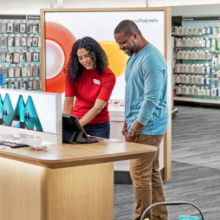
Food and beverage was one of Target Corporation's standout merchandise categories in the second quarter of 2026, generating $5.99 billion in sales — high single-digit growth year-over-year — as the mass-channel retailer reported total net sales of $26.5 billion, up 5.3% versus the prior-year period. The result marks a meaningful step-change for a category that has been central to Target's strategy of driving repeat traffic and basket-building across its roughly 2,019 U.S. stores.
Traffic & Channel Trends
Comparable sales rose 3.8% in the quarter, powered almost entirely by a 3.6% increase in comparable traffic — a metric that CPG suppliers and category managers track closely as a proxy for shopper engagement and planogram relevance. Store-originated comparable sales grew 2.7%, while digital comparable sales accelerated to 8.7%, led by more than 25% growth in same-day delivery. For food and beverage brands distributed through Target, the omnichannel velocity signal is significant: digitally originated sales now represent 19.6% of total merchandise sales, a channel shift that is reshaping how suppliers think about in-store display, end-cap placement, and digital shelf investment at the retailer. Non-merchandise sales — including Roundel advertising revenue — surged more than 20%, reaching $279 million in Q2 ad revenue alone, underscoring Target's growing leverage as a retail media platform for CPG brands seeking scan-data-backed targeting across the food and beverage aisle.
Category & Competitive Context
Food and beverage's high single-digit comp performance puts it alongside beauty as one of Target's fastest-growing merchandise segments this quarter, outpacing apparel and home furnishings. The result reflects both underlying category momentum and Target's stated commitment to value: the retailer has reduced prices on more than 10,000 frequently purchased items over the past year, a move that functions as an everyday low price (EDLP) push designed to close the gap with Walmart and club channel operators on staples. For national brands and private-label suppliers alike, the pricing dynamic is a double-edged signal — improved velocity and turn rates driven by lower shelf prices, but potential margin pressure on promotional programs negotiated with the buyer. Target's household essentials category, which includes paper goods, cleaning, and personal care adjacent to food and beverage, posted $4.62 billion in Q2 sales, further validating the cross-category basket strategy that makes the retailer a critical mass-channel distribution account for consumer packaged goods companies. Capital expenditures of $1.4 billion in the quarter — up 27% year-over-year — were concentrated in store remodels and new store openings, investments that directly affect planogram resets, fixture upgrades, and slotting opportunities for food and beverage brands seeking incremental TDP (total distribution points) as new locations come online.
Outlook for Suppliers
CEO Michael Fiddelke described the quarter as evidence of "increasing confidence that our strategy is resonating," pointing to the combination of style, value investment, and convenience as the core retail positioning. For CPG manufacturers, the full-year outlook is equally constructive: Target raised its net sales growth guidance to approximately 5%, one percentage point above prior guidance. The company now operates 2,019 stores, up from 1,982 a year ago, expanding the addressable door count for food and beverage brands tracking ACV distribution. With same-day delivery growth exceeding 25% and Target Circle 360 membership revenue rising, supplier investment in digital merchandising and retail media is increasingly a prerequisite for shelf competitiveness at the chain. Brands that can align promotional calendars — including TPR events and MCB programs — with Target's omnichannel traffic patterns will be best positioned to capture velocity gains as the retailer heads into the back half of the year.
Written by Michael Politz, Author of Guide to Restaurant Success: The Proven Process for Starting Any Restaurant Business From Scratch to Success (ISBN: 978-1-119-66896-1), Founder of Food & Beverage Magazine, the leading online magazine and resource in the industry. Designer of the Bluetooth logo and recognized in Entrepreneur Magazine's "Top 40 Under 40" for founding American Wholesale Floral, Politz is also the Co-founder of the Proof Awards and the CPG Awards and a partner in numerous consumer brands across the food and beverage sector.