
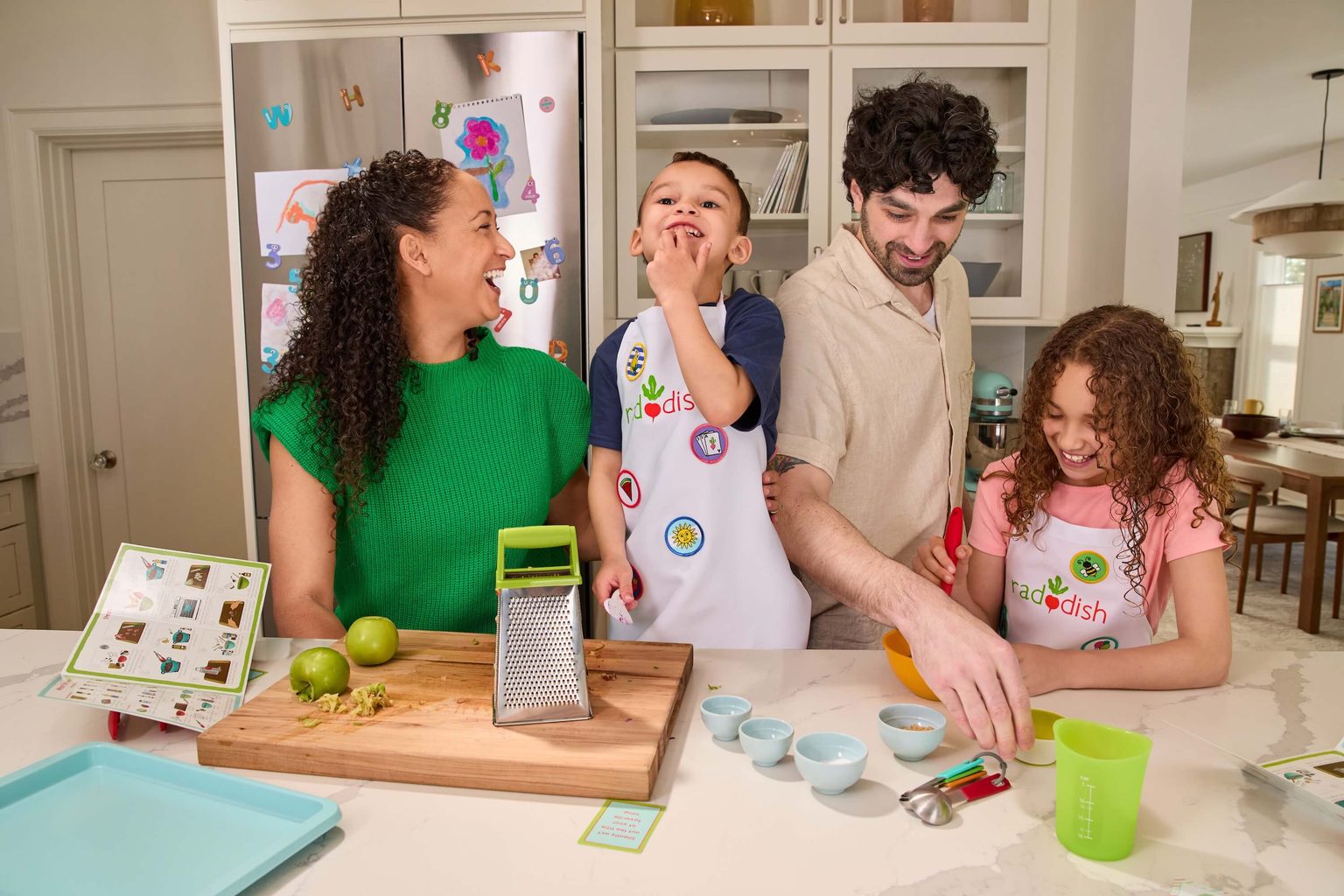
Raddish Kids, the subscription-based children's cooking kit brand, is making a seasonal push to capture family households during the summer window — a period when screen time concerns peak and parents actively seek structured, hands-on activities for kids. The brand's pitch is straightforward: hands-on cooking builds confidence and creativity while keeping children off devices, positioning Raddish as both an educational product and a family bonding platform. For grocery retailers and food-adjacent subscription services watching the family segment, the move signals how culinary-themed engagement tools are carving out space in the broader meal-kit and food-education category.
Raddish Kids operates primarily through a direct-to-consumer subscription model, shipping themed cooking kits monthly to households across the U.S. Unlike traditional meal kits targeting dinner-table convenience for adults, Raddish skews its merchandising and messaging squarely at the 4–14 age demographic, with recipes, technique cards, and culinary tools scaled for younger hands. The brand's summer activation is designed to spike new subscriber acquisition during the June–August window, when family purchasing intent and gifting occasions align with back-to-camp and end-of-school seasonal beats.
The children's activity kit space has become increasingly competitive, with brands across arts-and-crafts, STEM, and culinary verticals vying for the same household budget line. Within the food-kit subset, Raddish occupies a distinct niche: it is less about meal-prep convenience and more about culinary education and experiential family time — a positioning that sidesteps direct velocity comparisons with dinner-focused meal kit players. As syndicated data from Circana continues to show softness in traditional meal kit repeat purchase rates, experiential and skill-building food products are drawing renewed retailer and investor attention as a more defensible category.
For grocery retailers exploring private-label or branded culinary education adjacencies — particularly in natural/specialty and mass channels — Raddish's summer push underscores a broader opportunity to merchandise food-skill products alongside cooking oils, baking ingredients, and kids' pantry staples. End-cap and in-store display placements tied to back-to-school and summer programming calendars could represent a logical extension for retailers looking to drive basket size in the cooking and baking aisle. The brand's DTC model currently limits traditional scan data visibility, but household penetration gains made during summer could support future retail expansion conversations.
The seasonal strategy reflects a growing recognition among food and family brands that summer represents an underutilized activation window. As Food & Beverage Magazine has noted across its network coverage, brands that align product messaging with household routine disruption — like the school-year-to-summer shift — tend to outperform on trial metrics. Raddish is betting that a screen-free narrative, backed by hands-on culinary content, is compelling enough to convert seasonal browsers into long-term subscribers and, ultimately, loyal household brand advocates.
Written by Michael Politz, Author of Guide to Restaurant Success: The Proven Process for Starting Any Restaurant Business From Scratch to Success (ISBN: 978-1-119-66896-1), Founder of Food & Beverage Magazine, the leading online magazine and resource in the industry. Designer of the Bluetooth logo and recognized in Entrepreneur Magazine's "Top 40 Under 40" for founding American Wholesale Floral, Politz is also the Co-founder of the Proof Awards and the CPG Awards and a partner in numerous consumer brands across the food and beverage sector.