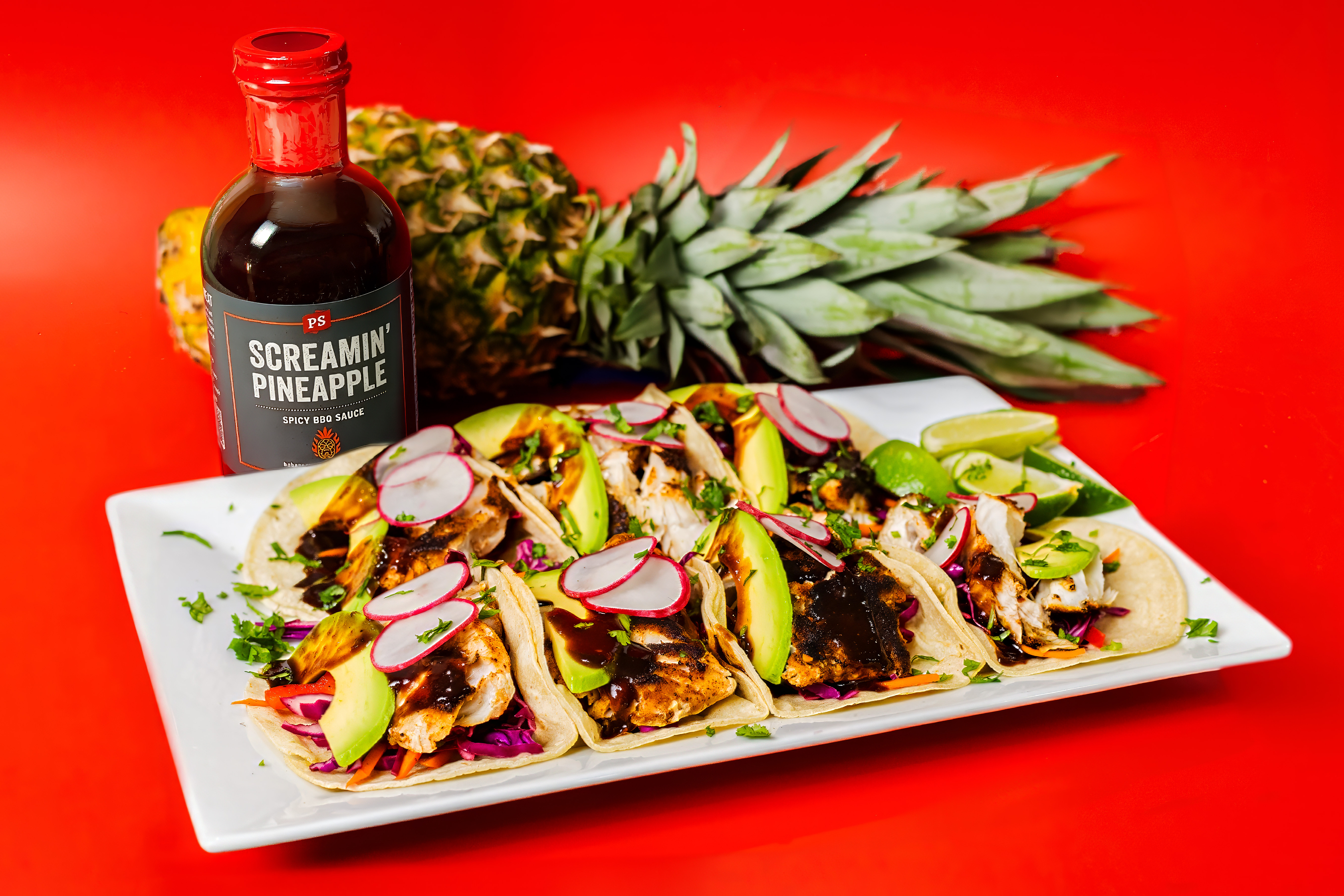
Wisconsin-based PS Seasoning has added Screamin' Pineapple Spicy BBQ Sauce to its condiment portfolio, expanding its BBQ sauce lineup to 12 SKUs and staking out the top heat position in the range. The 18-ounce bottle retails for $9.99 and is available now through psseasoning.com and select retail partners, with a store locator live on the brand's site.
The launch is a deliberate play on one of 2026's most-discussed flavor constructs. Online conversations about sweet-and-spicy profiles grew nearly 28% over the past year, according to food intelligence platform Tastewise, which flags pineapple-habanero as an emerging pairing. The Institute of Food Technologists' 2026 flavor outlook separately points to rising consumer demand for fruit-forward heat — tropical fruits layered with high-Scoville chiles — giving the SKU a credible category tailwind heading into planogram resets.
The Flavor Architecture
Most sweet-heat sauces in the condiments aisle front-load sugar and trail off with modest capsaicin. PS Seasoning's culinary and R&D team deliberately inverted that formula. "The habanero hits first. The pineapple comes through on the finish and rounds it out. It's legitimately hot, but there's still a lot of flavor behind the heat," said Jed Hanson, executive chef at PS Seasoning. That structural differentiation matters for velocity: shoppers scanning a crowded BBQ sauce shelf are increasingly fluent in flavor-intensity cues, and a heat-first profile gives retail buyers a clear attribute story to merchandise against mainstream EDLP sauces.
The sauce is positioned as a multi-application product — glaze, baste, or finishing sauce — across grilled wings, BBQ ribs, pulled pork, shrimp skewers, and fish tacos. Broad use-case framing supports trial and repeat, two levers that drive favorable scan data conversations during category reviews.
Retail and Portfolio Context
PS Seasoning, a third-generation family business and part of the Dervati platform alongside Pro Smoker, produces more than 5,000 blends and over 80 million pounds of seasoning annually. That manufacturing scale gives the company private label and co-packing credibility alongside its branded business — a dual-track model increasingly common among regional flavor specialists seeking broader ACV without committing to national slotting fees.
Screamin' Pineapple's current distribution footprint sits in select retail doors plus direct-to-consumer, a go-to-market sequence familiar to independent and regional brands building scan history before pitching broader chain placement. For grocery buyers in the condiments and sauces category, the DTC velocity data the brand accumulates now will be a key proof point in any future shelf conversation. The timing — ahead of holiday grilling gifting and stocking-stuffer sets — also positions the SKU for incremental off-shelf display opportunities in seasonal endcap programs.
The swicy condiment segment has attracted significant new-item activity from both national brands and emerging challengers over the past 18 months. Retail operators tracking category performance through Circana or Nielsen syndicated data will recognize pineapple-habanero as one of the flavor adjacencies moving from specialty and natural/specialty channel into conventional grocery. For a regional brand like PS Seasoning, owning that pairing early — with a fully developed SKU already in-market — positions it ahead of the inevitable national-brand follow-on launches. See also our coverage of emerging condiment trends and BBQ and grilling category dynamics.
Written by Michael Politz, Author of Guide to Restaurant Success: The Proven Process for Starting Any Restaurant Business From Scratch to Success (ISBN: 978-1-119-66896-1), Founder of Food & Beverage Magazine, the leading online magazine and resource in the industry. Designer of the Bluetooth logo and recognized in Entrepreneur Magazine's "Top 40 Under 40" for founding American Wholesale Floral, Politz is also the Co-founder of the Proof Awards and the CPG Awards and a partner in numerous consumer brands across the food and beverage sector.