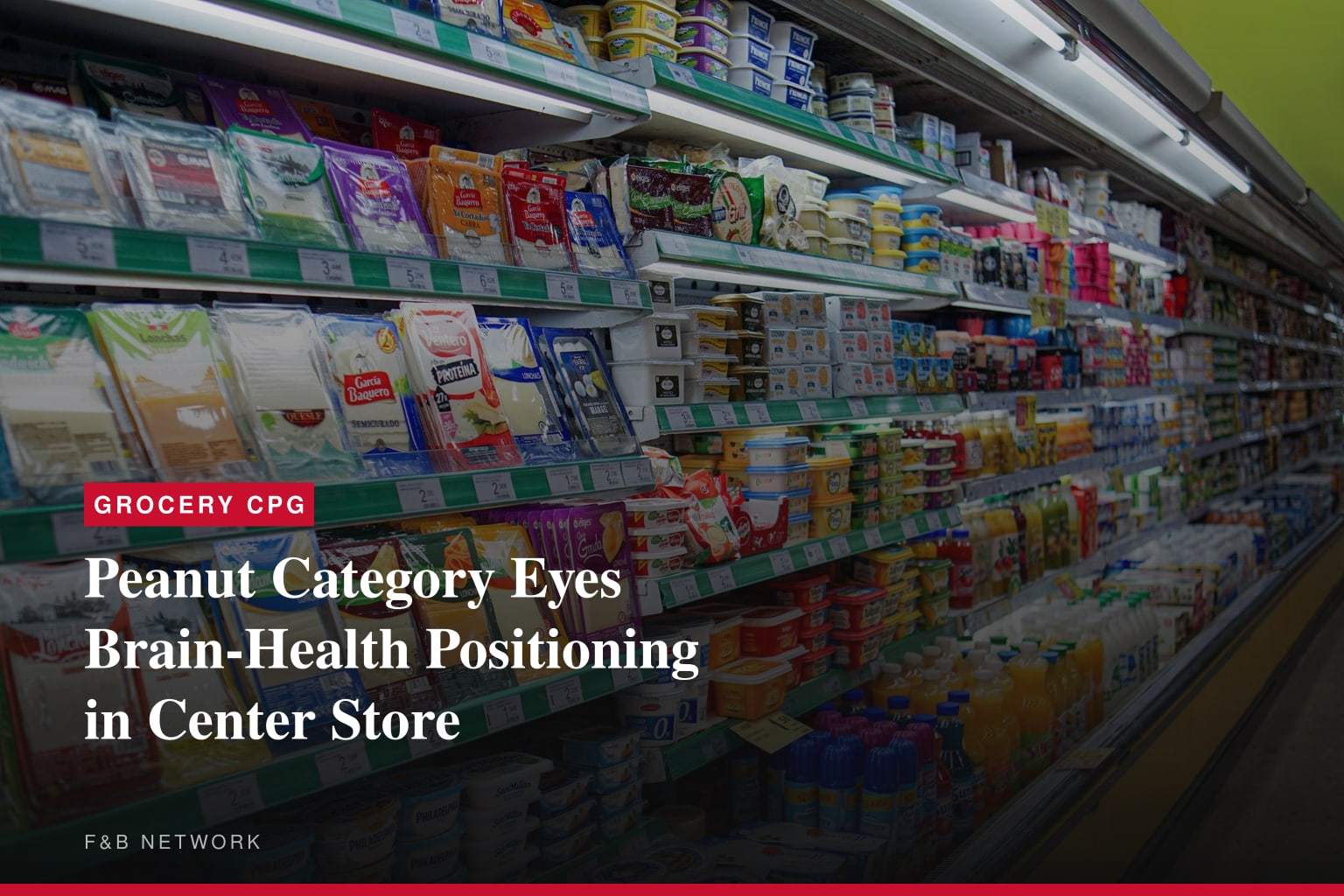
The peanut category is making a calculated pivot toward brain-health positioning, a functional benefit that has emerged as one of the most shopper-resonant claims across snacks, spreads, and nutrition segments. With syndicated data from Circana consistently showing wellness-adjacent claims lifting both velocity and basket attachment, peanut suppliers and their retail partners are exploring how brain-health messaging can move product off the shelf and expand the category's role beyond lunchbox staple.
Peanuts and peanut-based products — including natural peanut butter, roasted snack packs, and peanut-fortified bars — are stocked across virtually every retail channel, from mass and grocery to club and natural/specialty. The category commands strong ACV across conventional grocery chains and maintains a dependable planogram presence in both the nut-butter aisle and the snack-nut set. End-cap and floor-stack promotional activity tied to back-to-school and football season historically drives the category's highest turn rates of the year, but a brain-health narrative could open new promotional windows in Q1 and Q2 alongside New Year wellness resets.
The brain-health platform is not without competition. Omega-3-rich walnuts have long owned the "brain nut" claim in retail signage and on-pack copy, and functional snack brands in the natural channel have aggressively pursued cognitive-wellness positioning through ingredients like lion's mane, ashwagandha, and phosphatidylserine. For peanuts to credibly compete, category suppliers will need to invest in shopper education — whether through shelf talkers, digital coupons tied to MCB programs, or retailer co-op campaigns that connect on-pack nutritional callouts to in-store display.
From a category-management standpoint, brain-health claims offer peanut brands a path to adjacency expansion. Product innovation that bridges the peanut set with functional food destinations — think nutrition bars, better-for-you snack mixes, or fortified spreads — could increase TDP across channels and improve shelf placement through cross-merchandising with vitamin and supplement departments. Retailers operating HiLo pricing structures may also find that brain-health SKUs justify a slight premium price tier, improving margin per facing without relying solely on TPR-driven volume. For more on functional-wellness trends reshaping center store, see our coverage of functional food and beverage innovation and better-for-you snack trends in grocery.
The broader opportunity here is one of narrative ownership. Peanuts are an affordable, accessible, and nutritionally dense ingredient — attributes that resonate with value-conscious shoppers who still want to trade up on health. As Food & Beverage Magazine has noted, functional claims that align everyday pantry staples with premium health outcomes are proving to be among the most durable drivers of category growth in the current retail environment. Peanut stakeholders that move quickly to build out a science-backed brain-health platform — and back it with retail programming — are best positioned to capture that upside.
Written by Michael Politz, Author of Guide to Restaurant Success: The Proven Process for Starting Any Restaurant Business From Scratch to Success (ISBN: 978-1-119-66896-1), Founder of Food & Beverage Magazine, the leading online magazine and resource in the industry. Designer of the Bluetooth logo and recognized in Entrepreneur Magazine's "Top 40 Under 40" for founding American Wholesale Floral, Politz is also the Co-founder of the Proof Awards and the CPG Awards and a partner in numerous consumer brands across the food and beverage sector.