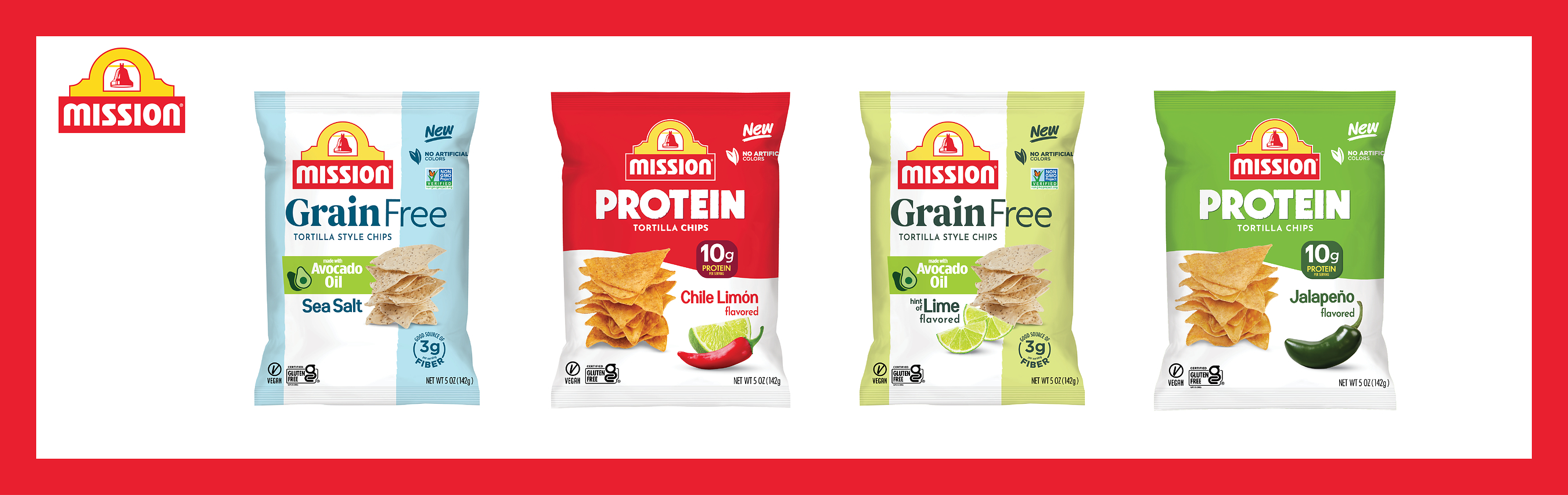
Mission Foods is pushing deeper into the better-for-you snack aisle with four new tortilla-style chip SKUs, hitting Kroger and its affiliate banners nationwide this fall. The Irving, Texas-based maker of the world's top-selling tortilla brand is adding Mission® Protein Tortilla Style Chips in Chile Limón and Jalapeño, and Mission® Grain Free Tortilla Style Chips in Sea Salt and Hint of Lime — a deliberate play at two of the fastest-moving health-and-wellness macro trends in the salty snack category.
The Products
Mission Foods is positioning the Protein Chips as a functional snack, delivering 10 grams of plant-based protein per serving across both flavors. The SKUs carry gluten-free and vegan certifications, attributes that have become table stakes for premium snack planogram placement in natural/specialty and conventional grocery alike. The Grain Free line leans into clean-label momentum: both Sea Salt and Hint of Lime varieties are built on 100% cassava flour, whole chia seeds, and avocado oil, with a non-GMO ingredient deck and a fiber claim. Together, the four items extend Mission's Better for You lineup, which has historically anchored the brand's innovation pipeline beyond its core tortilla and wrap business.
Retail Footprint and Outlook
The initial distribution window at Kroger and its affiliates — which include banners such as Ralphs, King Soopers, Fred Meyer, and Harris Teeter, collectively representing thousands of doors and meaningful ACV across the U.S. — gives Mission a credible national launch platform before the holiday snacking season accelerates category velocity. The company confirmed additional retail partners are scheduled to come online through fall 2026, suggesting a phased distribution build designed to establish scan data and velocity benchmarks at Kroger ahead of broader chain-by-chain sell-in conversations.
The strategic timing is notable. Salty snack velocity in the protein and grain-free segments has outpaced the broader chip category for several consecutive quarters, with syndicated data consistently showing better-for-you chip sub-segments gaining both TDP and shelf facings at the expense of conventional corn-based tortilla chips. For Mission, leveraging its existing DSD and direct-distribution relationships at major conventional grocery chains lowers the friction of gaining incremental shelf placement — a structural advantage smaller better-for-you brands often lack.
"Our Better for You line has always been about giving people trend-setting options that fit their lifestyle and taste great," said Sathish Mohanraju, VP of Sales and Marketing for Mission Foods. "Whether folks are looking for simpler ingredients or a new favorite everyday snack — these new chips are for them."
Mission's move into functional and grain-free chip territory also puts it in more direct competition with emerging brands in the snacks and confectionery segment that have built category share around cassava-based and legume-forward platforms. The brand's scale, however, gives it negotiating leverage on slotting and promotional spending that most challenger brands cannot match, and its tortilla equity provides consumer familiarity that can accelerate trial at shelf. Retailers evaluating planogram resets heading into early 2027 will likely weigh Mission's chip expansion alongside its core wrap and tortilla velocity as they rationalize the better-for-you snack bay. The better-for-you grocery segment continues to attract national brand entries as consumer label-reading behavior sustains post-pandemic momentum.
Written by Michael Politz, Author of Guide to Restaurant Success: The Proven Process for Starting Any Restaurant Business From Scratch to Success (ISBN: 978-1-119-66896-1), Founder of Food & Beverage Magazine, the leading online magazine and resource in the industry. Designer of the Bluetooth logo and recognized in Entrepreneur Magazine's "Top 40 Under 40" for founding American Wholesale Floral, Politz is also the Co-founder of the Proof Awards and the CPG Awards and a partner in numerous consumer brands across the food and beverage sector.