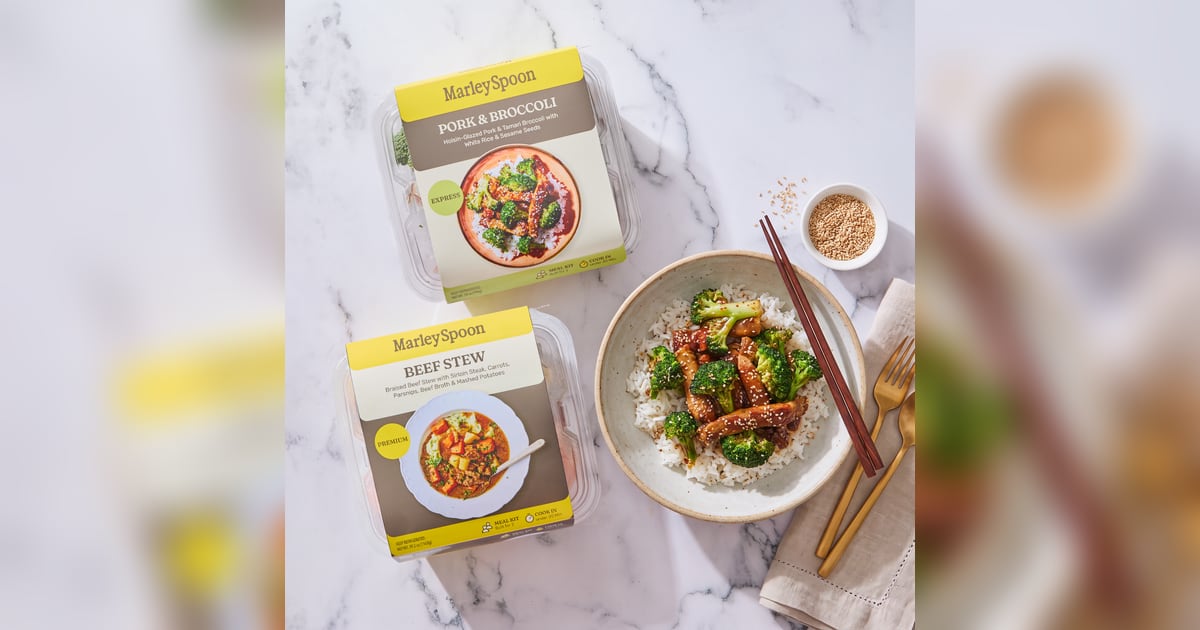
Marley Spoon is moving its meal kit model into traditional grocery retail for the first time, rolling out products to more than 150 Food Lion stores across North Carolina. The launch follows a September introduction of Marley Spoon's prepared meals line at ShopRite. This new Food Lion partnership represents the brand's first retail push for its core meal kit offering—kits that contain all ingredients and instructions needed for consumers to prepare meals at home.
Product Lineup The grocery retail assortment features six meal options: Chorizo Tacos, Beef Enchiladas, Gnocchi Bolognese, Asian-Style Pork & Broccoli, Chicken Taco Bowl, and Beef Stew. Most kits are priced at $11.99, with Beef Stew at $12.99.
Market Context
The expansion signals growing consumer interest in at-home meal preparation across retail channels.
Marley Spoon, which traditionally operates through direct-to-consumer subscriptions, is now diversifying its distribution to reach grocery shoppers who prefer one-off purchases over recurring subscriptions. This retail strategy mirrors a broader shift among meal kit companies seeking sustainable growth beyond their core subscription bases.
For more insights and trends in the food and beverage sector, check out more articles in The Food & Beverage Magazine family of publications.
Written by FBM Publications Editors
Frequently Asked Questions
Why is Marley Spoon going into Food Lion now, and what does this mean for the meal kit category?
Marley Spoon's subscription model has hit a ceiling—recurring revenue only works for 15-20% of the addressable market. Moving 150+ SKUs into Food Lion's 1,100+ stores across North Carolina lets them reach transactional shoppers who'll never sign up for a box. This is survival strategy, not growth theater. Every meal kit operator from Factor to Freshly is doing the same pivot.
What's the pricing play here at $11.99 per kit, and can that actually work in grocery?
That's undercutting HelloFresh's retail price point by $2-3 per serving and betting Food Lion traffic covers their margin squeeze. The Beef Stew at $12.99 absorbs higher protein costs, but Marley Spoon is essentially accepting 25-30% lower unit economics to capture impulse buys. Don't expect profitability on individual transactions—they're buying data and testing shelf velocity.
How does Food Lion's footprint compare to ShopRite for Marley Spoon's retail strategy?
ShopRite's 340 stores are concentrated in the Northeast; Food Lion's 1,100+ are predominantly in the Mid-Atlantic and Southeast. That's 4x the store count and access to a warmer, less-saturated meal kit market. North Carolina specifically has lower meal kit penetration than Boston or New Jersey, so Marley Spoon is playing checkers—targeting density in underpenetrated regions before the category gets commoditized.
Will grocery retail actually stick for Marley Spoon, or is this a one-quarter experiment?
Success hinges entirely on repeat purchases—if velocity hits 0.3-0.4 turns per week per item, they expand regionally. If it's below 0.2 turns, Food Lion delists within 90 days. Watch whether Marley Spoon adds promotional funding to Food Lion's circulars or relies on shelf position alone; that'll tell you if they're committed or just hedging bets.
What does this Food Lion launch signal about subscription meal kit market consolidation?
The subscription model is fragmenting—only HelloFresh and Factor have enough capital to sustain unprofitable DTC channels while building retail. Marley Spoon's pivot shows they're competing for grocers' shelf real estate, not just CPG brands. Expect consolidation within 24 months as weaker players either get acquired or abandon retail after one cycle.