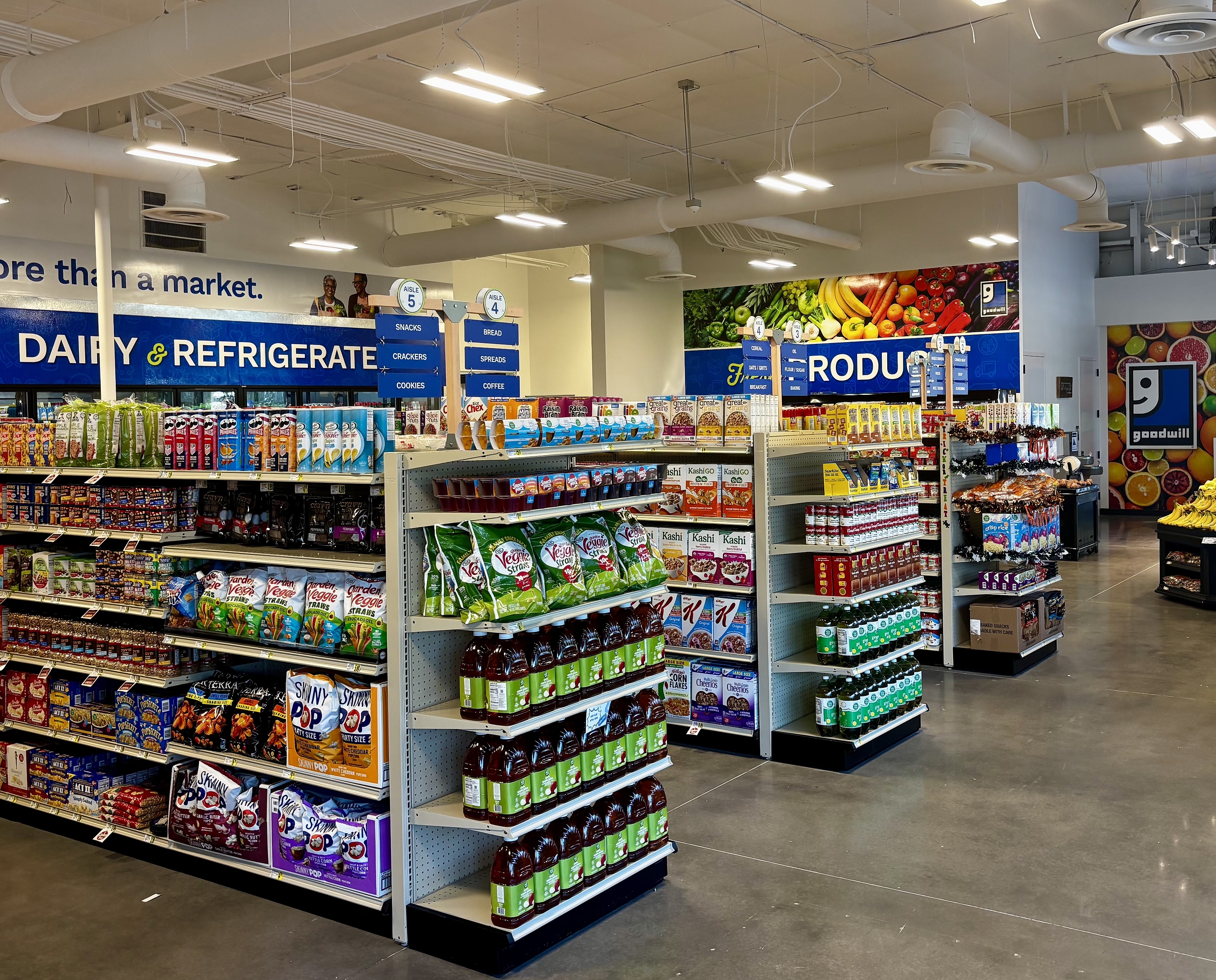
Goodwill Industries of Eastern North Carolina (GIENC®) opened a 7,600-square-foot community food market on September 10 in Aurora, N.C., a USDA-designated food desert where residents routinely travel more than 10 miles to access a full-service grocery store. The Goodwill Community Cupboard, located at the Brantley Tillman Opportunity Center at 150 South 5th Street, is the flagship retail expression of GIENC's Goodwill Feeds initiative and marks one of the more ambitious nonprofit food-access plays to emerge in the rural Southeast in recent years.
The format stocks fresh fruits and vegetables, proteins, non-perishable foods, and everyday pantry staples — a SKU mix that mirrors the core perimeter-and-center-store layout of a conventional small-format grocer. For Beaufort County and Richland Township, where Aurora is situated, the opening represents the first walkable or short-drive access point to fresh food for a population that easily clears the USDA threshold: at least 33% of residents living more than 10 miles from a supermarket.
Food Desert Context
Rural food deserts have become an acute supply-chain and public-health challenge for regional grocery operators and CPG brands alike. When brick-and-mortar grocery infrastructure is absent, scan data voids in those ZIP codes mask real unmet demand — a dynamic that distorts category planning and ACV calculations for brands relying on syndicated data from Nielsen or Circana. GIENC's move underscores a gap that traditional grocery retail operators have yet to close in many parts of the rural South, where thin population density makes conventional store economics difficult to justify.
Christopher Hash, GIENC president and CEO, framed the investment in terms that resonate well beyond the nonprofit sector. "When families have more reliable access to healthy food, children are better equipped to learn, adults are more reliable at work, and seniors can remain independent longer," Hash said. The Community Cupboard, he added, is "the physical manifestation of the organization's vision of Transforming Lives Through Opportunities."
Beyond the Shelves
The Aurora location embeds a community room focused on STEAM-related programming alongside its retail floor, a design choice that signals GIENC's intent to operate the format as more than a food-access point. GIENC already runs an employment program and donation center in nearby Washington and deploys workforce development, Goodwill Feeds distributions, and community grants across Beaufort County through its Community Empowerment Program.
Earlier in 2026, GIENC announced a strategic partnership with TABLE to expand Chefs@Home, a food-kit program serving food-insecure school-age children and families in Orange County — another program operating under the Goodwill Feeds umbrella. Together, these initiatives reflect a vertically integrated food access and community retail model that CPG manufacturers and regional distributors working in underserved markets will want to monitor as a potential alternative-channel entry point.
Written by Michael Politz, Author of Guide to Restaurant Success: The Proven Process for Starting Any Restaurant Business From Scratch to Success (ISBN: 978-1-119-66896-1), Founder of Food & Beverage Magazine, the leading online magazine and resource in the industry. Designer of the Bluetooth logo and recognized in Entrepreneur Magazine's "Top 40 Under 40" for founding American Wholesale Floral, Politz is also the Co-founder of the Proof Awards and the CPG Awards and a partner in numerous consumer brands across the food and beverage sector.