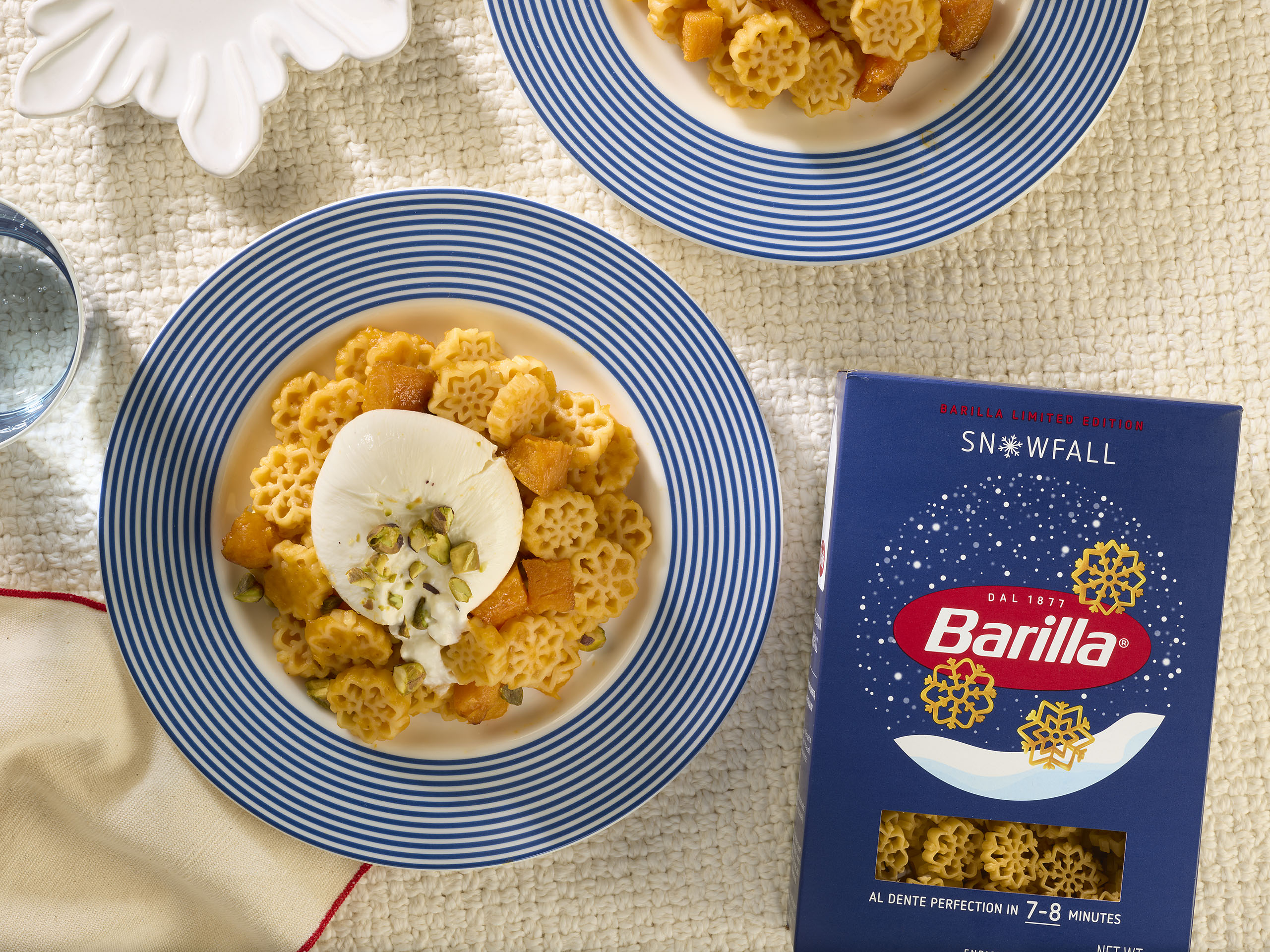
Barilla is leaning harder into seasonal merchandising this holiday cycle, bringing back its Snowfall limited-edition pasta for a third consecutive year while expanding the festive lineup with new Limited Edition Holiday Packs for two core blue-box shapes — Cellentani and Classic Elbows. The products are available through January 2027 at Walmart, Amazon, Publix, Albertsons, and Kroger, covering a broad swath of conventional grocery ACV.
The Seasonal SKU Strategy
Snowfall — a tri-shape assortment featuring a classic snowflake, a poinsettia-inspired form, and a heart-centered design, each with sauce-catching grooves — has become one of the more recognizable seasonal pasta plays in the dry pasta aisle. Its third-season return signals that the SKU has earned its planogram real estate through demonstrated velocity, a threshold most limited-time offerings in the dry grocery set struggle to clear. For category managers, a returning seasonal item with multi-year scan data is a meaningfully lower-risk slot than a first-year launch.
The new Cellentani and Classic Elbows Holiday Packs add limited-edition winter-scene packaging to two shapes that already anchor the everyday dry pasta planogram. The approach — dressing up a core TDP rather than introducing an entirely new shape — reduces supply chain complexity while still generating incremental display and in-store excitement. Retailers can merchandise these in existing pasta sets, on seasonal end-caps, or in cross-category holiday meal-solution floor stacks alongside sauce, canned tomatoes, and breadcrumbs.
Category and Competitive Context
The dry pasta category has faced a normalization hangover after the pantry-loading surge of 2020–2021, with syndicated data from Circana and Nielsen reflecting softer unit velocity as consumers rebalanced pantry stocks. Against that backdrop, limited-time offerings with strong brand equity give national brands a tool to defend shelf space and justify premium positioning against growing private-label competition. Store brands have made meaningful gains in the dry pasta set, so seasonal differentiation — the kind that own-brand manufacturers can rarely replicate at speed — remains one of the clearest advantages Barilla and other national brand players hold.
Barilla's decision to anchor the holiday lineup around recipe usage occasions is also category-smart. By pairing shapes to specific preparations — Cellentani for baked dishes, Elbows for mac and cheese riffs, Snowfall for showpiece holiday plates — the brand is essentially doing the meal-planning work that drives multi-unit purchase intent. That kind of recipe-forward messaging integrates cleanly into digital circular programs and retailer loyalty app placements, both of which have become critical trade vehicles as print FSIs lose reach.
Retail Execution Outlook
With placement confirmed across five major banners representing significant conventional grocery coverage, the key variable for Barilla's holiday push will be in-store execution — specifically whether retailers activate secondary display positions like end-caps or seasonal clip strips to drive impulse turns beyond the base pasta gondola. The dual-entry strategy (Snowfall as a novelty item, holiday-pack Cellentani and Elbows as core-shape familiarity plays) gives retail partners flexible merchandising options suited to different store formats and holiday set configurations.
For more on seasonal brand strategy in the dry grocery aisle, see related coverage on brand packaging innovation and grocery retail merchandising trends.
Written by Michael Politz, Author of Guide to Restaurant Success: The Proven Process for Starting Any Restaurant Business From Scratch to Success (ISBN: 978-1-119-66896-1), Founder of Food & Beverage Magazine, the leading online magazine and resource in the industry. Designer of the Bluetooth logo and recognized in Entrepreneur Magazine's "Top 40 Under 40" for founding American Wholesale Floral, Politz is also the Co-founder of the Proof Awards and the CPG Awards and a partner in numerous consumer brands across the food and beverage sector.