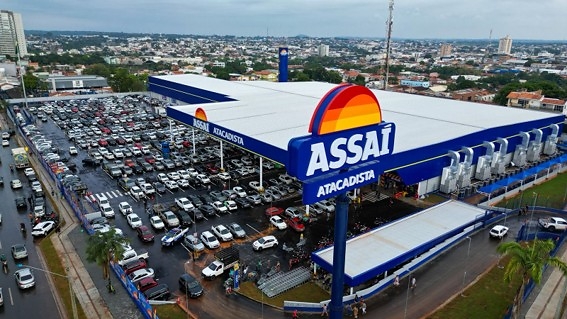
Brazilian cash-and-carry operator Assaí posted adjusted recurring net income of R$ 248 million in the third quarter of 2026, a 55.2% year-over-year gain, as the retailer pushed deeper into private label, pharmacy, and last-mile delivery — signaling that its ecosystem diversification strategy is generating measurable commercial lift even amid elevated household indebtedness across Brazil.
Accounting net income reached R$ 427 million, up 119%, partly aided by R$ 179 million in extemporaneous PIS/COFINS tax credits. Gross revenue totaled R$ 21.3 billion, a 2.7% increase, while adjusted EBITDA held at R$ 1.1 billion with a stable 5.7% margin. Gross margin expanded 45 basis points to 17.2%, and strict SG&A discipline kept expense growth at 4.2% — below Brazil's IPCA inflation print of 4.4%. Customer traffic climbed 2.1%, pushing monthly footfall past 40 million shoppers, a metric that underscores the chain's reach in the club-channel and wholesale-club format that Assaí operates.
Deleveraging and Cash Generation
Strong operating cash flow — R$ 3.3 billion over the trailing twelve months — allowed Assaí to reduce its net-debt-to-EBITDA leverage ratio to 2.15x from 3.03x a year earlier. A lower cost of debt, combined with a 61% drop in the cost of receivables discounting, drove net financial expenses down 8.8%. "The third quarter demonstrated Assaí's ability to safeguard operations and make progress on variables within our control: we delivered top-line growth, stable market share, preserved profitability, and leverage reduction," said Belmiro Gomes, CEO of Assaí. The deleveraging trajectory matters for shelf-space investment: a leaner balance sheet gives the company more flexibility to fund slotting, promotional programs, and store-level merchandising as it scales new categories.
Private Label and Ecosystem Buildout
Assaí's own-brand portfolio is a key watch item for CPG manufacturers competing in the Brazilian market. The company launched more than 30 new items during Q3, bringing its private label total to 140 SKUs across four store-brand tiers — Assaí, Assaí Chef, Econobom, and the newly introduced Assaí Bloom. The retailer has set a year-end target of 250 SKUs, a near-doubling of the current assortment that will intensify pressure on national brands across pantry staples, culinary, and wellness adjacencies. Category managers tracking the Brazilian market should note that Assaí is explicitly expanding its dietary supplement assortment to 300 stores, a direct play on the fast-growing health-and-wellness segment within food retail.
Beyond grocery, Assaí Farma closed the period with 11 pharmacy units in São Paulo — all opened between July and November — and remains on track to reach 25 locations by December, complete with an e-commerce module inside the Meu Assaí app offering in-store pickup. In last-mile delivery, sales surged 204% across 104 stores, a velocity figure that rivals the growth rates seen in U.S. rapid-commerce partnerships. The acquisition of 18 gas stations in São Paulo adds a convenience forecourt pillar, though those locations are not expected to begin operations until August 2027. Taken together, Assaí is building a multi-format, multi-channel retail ecosystem that increasingly resembles the diversified operating models of Walmart and Carrefour in adjacent markets — a development that CPG brands with Latin American distribution strategies will need to factor into their category management and private label planning.
Written by Michael Politz, Author of Guide to Restaurant Success: The Proven Process for Starting Any Restaurant Business From Scratch to Success (ISBN: 978-1-119-66896-1), Founder of Food & Beverage Magazine, the leading online magazine and resource in the industry. Designer of the Bluetooth logo and recognized in Entrepreneur Magazine's "Top 40 Under 40" for founding American Wholesale Floral, Politz is also the Co-founder of the Proof Awards and the CPG Awards and a partner in numerous consumer brands across the food and beverage sector.